News
FY26 in numbers: what Pakistan actually sold the world
Textiles finished flat. Technology exports hit a record. The headline hides a change in what Pakistan sells and who sells it.
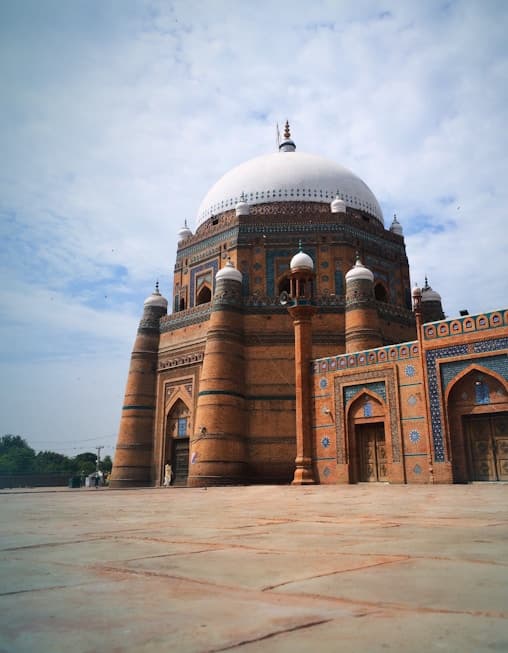
The tiled dome of Shah Rukn-e-Alam's shrine in Multan
The fiscal year closed on 30 June, and the provisional picture is now clear enough to read. The economy grew 3.7 percent in FY26, taking its size to roughly $452 billion. Economists have been consistent that holding growth above 4 percent depends on structural reform, export performance and macroeconomic stability rather than on any one good year.
Textiles: a plateau with a good month at the end
Textile export proceeds came in at about $17.93 billion for FY26, against $17.88 billion the year before — essentially flat. Through eleven months the sector was up 1.83 percent at $16.67 billion, having spent most of the year hovering around zero and only rebounding sharply in April, when monthly exports jumped over 20 percent year-on-year to roughly $1.49 billion.
For a sector that is still over half of Pakistan's goods exports, flat is the whole story. Capacity exists; utilisation and order flow are the constraint.
Technology: the number that moved
Technology exports rose 21 percent to a record $4.6 billion, from $3.8 billion in FY25 — software, IT-enabled services, BPO, telecommunications, cloud, AI, cybersecurity and digital consulting. The composition underneath it is the more interesting part. Freelancer remittances rose 78 percent to $1.76 billion, with freelance earnings crossing $1 billion for the first time and reaching roughly a quarter of total IT export value. Pakistan now counts more than 2.37 million registered freelancers and is described as the world's fourth-largest freelance market.
- $17.93bn
- textile exports, FY26
- $4.6bn
- technology exports, +21%
- $1.76bn
- freelancer remittances, +78%
The pattern in the composition
Put the two side by side and a pattern emerges that no single headline captures. The part of the export economy built on large, established, relationship-based manufacturing was flat. The part built on hundreds of thousands of small, independent sellers finding buyers directly — mostly online, mostly without an intermediary, mostly without a trade mission — grew at double digits and, in the freelance segment, at 78 percent.
The fastest-growing export category in FY26 was the one where the seller found the buyer without anyone's help.
That is not an argument that services will replace textiles. Pharmaceuticals also grew strongly on the back of deregulation, and rice held an eight-million-tonne target. It is an argument about mechanism. Where Pakistani sellers had a direct, low-friction way to be discovered and hired, volume grew fast. Where they depended on trade fairs, agents and inherited relationships, it did not.
What FY27 has to fix
- Discovery for goods. Manufacturers have no equivalent of the platforms that made 2.37 million freelancers findable.
- Evidence on demand. The US tariff schedule, the EU's revised GSP framework and buyer due diligence all now ask the supplier to prove things quickly.
- Working capital for the firms that can grow. SMEs remain over 90 percent of businesses and single-digit percent of private credit.
None of those are manufacturing problems. They are information problems, and Pakistan has just spent a year demonstrating what happens to an export category once they are solved.
- FY26
- Economy
- Exports
Sources
- Nukta — Pakistan's economy grows 3.7% in FY26, total size reaches $452B
- Dawn — Textile exports stagnate at $17.9bn in FY26
- The Express Tribune — IT exports hit record $4.6b
Figures are as reported at the dates given and are provisional where the underlying series is. Where published estimates differ, the range is stated in the text.
Get new pieces as they publish
Reporting and analysis on Pakistan's export economy, emailed when we publish. No membership pitch, and you can leave whenever you want.
Prefer a reader? RSS feed
Be the supplier a buyer can actually find
Al-Ukaz is building Pakistan's verified record of who makes what — company by company, document by document. Registration for manufacturers is open now.
Join the founding cohort