Sector
Sports Goods
The city that makes most of the world's hand-stitched footballs — around 2,400 firms, FIFA-certified capability, and a labour-compliance record that stands up to audit.
- ~70%
- of world hand-stitched footballs
- ~2,400
- manufacturers in one cluster
- 200,000+
- skilled workers
Why buyers source here
A cluster, not a factory
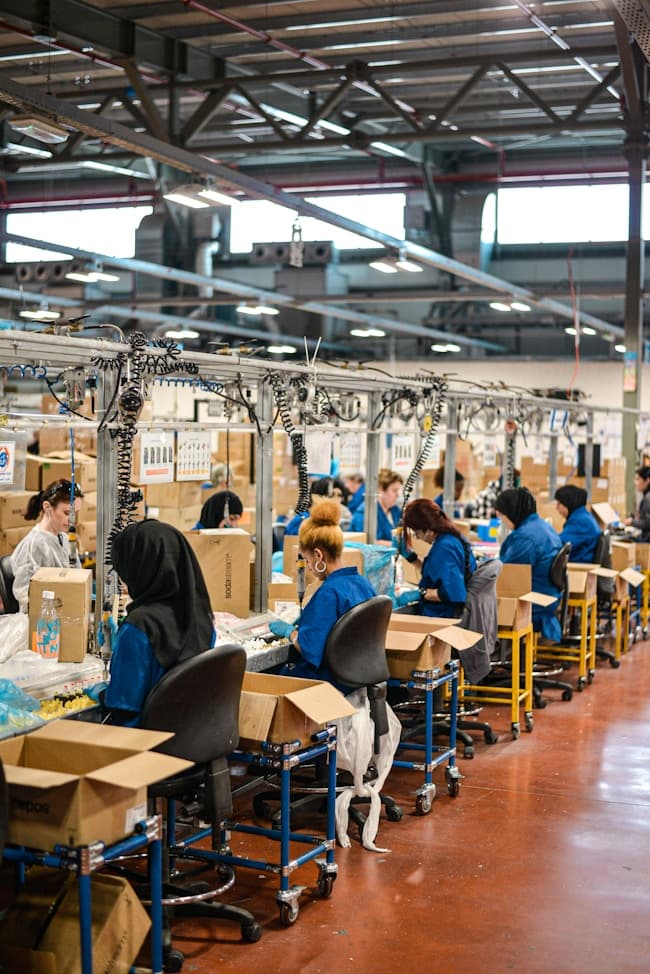
Roughly 2,400 firms in one district means you can place a 500-unit specialist order or a multi-million-unit programme, and find component supply for both within a few kilometres.
Hand skills at scale
Hand-stitching is difficult to industrialise and difficult to relocate. Sialkot has 200,000-plus workers who do it, which is why roughly 70% of the world's hand-stitched footballs come from here.
Labour compliance with a track record
Following the Atlanta Agreement, stitching moved out of homes and into monitored centres. It is one of the region's more serious industry-led compliance programmes, and it is auditable.
Certified to the standards that matter
FIFA Quality and Quality Pro capability for balls, CE marking for protective equipment sold into the EU, and GSP+ duty-free access on top.
There is a good chance the last football you held was made in Sialkot. The district supplies something over 70% of world demand for hand-stitched inflatable footballs — on the order of 40 million balls a year — across roughly 2,400 companies employing more than 200,000 people directly.
That concentration is the commercial advantage. A cluster of 2,400 firms in one district means the supply base can absorb both a specialist order of a few hundred units and a programme in the millions, and that components, materials and finishing are all within a short drive of each other. Few sourcing destinations offer that combination of depth and flexibility in a single category.
Why the skill has not moved
Hand-stitching a ball well is not a process that automates cleanly, and it is not a skill a new origin acquires in a few years. Sialkot's advantage is a workforce of over 200,000 people who have done it for generations, supported by a local supply chain for bladders, panels, laminates and inks. It is the reason the cluster has held its position through decades of low-cost competition.
The compliance record is a reason to buy, not a caveat
Sialkot's response to the child-labour crisis in football stitching in the 1990s — moving stitching out of homes and into monitored centres under what became the Atlanta Agreement — was one of the more serious industry-led compliance programmes attempted anywhere in the region. Three decades on, the monitoring infrastructure and the audit culture are still there. For a brand with a due-diligence obligation, that history is an asset: this is a cluster used to being inspected and used to documenting itself.
A supply base that has been audited for thirty years is a very different proposition from one being audited for the first time.
What the cluster has never had is a way for a buyer to find the right firm within it under its own name. Most output leaves under someone else's mark, and searching for a manufacturer here turns up directory spam rather than an authoritative list. Al-Ukaz is building that list — verified at the company level, with certifications checked against their issuer.
A note on the numbers: published export figures for the sports segment range from about $450 million to $700 million depending on the source and year, inside a district export total commonly cited at around $3 billion. Those come from provincial data, association estimates and trade press at different dates and do not fully agree. The scale of the cluster is not in dispute.
What Pakistan makes
- Inflatable balls
- Hand-stitched, thermo-bonded and machine-stitched footballs, futsal, volleyball and rugby balls — around 40 million a year.
- Protective gear
- Shin guards, goalkeeper gloves, martial-arts and boxing equipment.
- Apparel & gloves
- Sportswear, cycling and motorcycle gloves, where the sports and leather clusters overlap.
- Field equipment
- Cricket goods, hockey sticks, fitness accessories and training aids.
Where it is made
- Sialkot
- Effectively the whole sector — roughly 2,400 companies and a supplier base built over a century.
- Wazirabad & Gujranwala
- Adjacent metalworking and component supply feeding the same cluster.
Standards this sector works to
What to ask for when you qualify a supplier in this category, and what an established exporter will already hold. Al-Ukaz checks these against the issuing body rather than taking an upload on trust.
FIFA Quality / Quality Pro
Ball performance certification, and the entry ticket for federation supply.
SEDEX / SMETA · ILO-aligned audit
Labour conditions, watched more closely in this category than almost any other — and documented accordingly.
CE marking
Required for protective equipment sold into the EU.
ISO 9001
Quality management across batch production.
Sourcing sports goods from Pakistan?
Tell us what you are looking for — category, volumes, the certifications you need — and we will point you at verified manufacturers who can serve it. Al-Ukaz operates under the endorsement of the Ministry of Commerce, Government of Pakistan.
Talk to us about sourcingManufacture in this sector?
Get on the record buyers are being pointed at. Registration for Pakistani manufacturers is open now.
Join the founding cohortSources
- Government of Punjab — Sialkot key industries
- DHL — Exploring the sports goods manufacturing industry in Sialkot
- Emerging Pakistan — Surgical goods
Figures are as reported at the dates given and are provisional where the underlying series is. Where published estimates differ, the range is stated in the text.