Sector
Textiles & Garments
A cotton-to-garment chain inside one country, shipping $17.9 billion a year, with duty-free access to the EU on most of what it makes.
- $17.93bn
- textile exports, FY26
- Duty-free
- into the EU under GSP+
- 19%
- US tariff — below India, Bangladesh, Vietnam
Why buyers source here
Vertically integrated at home
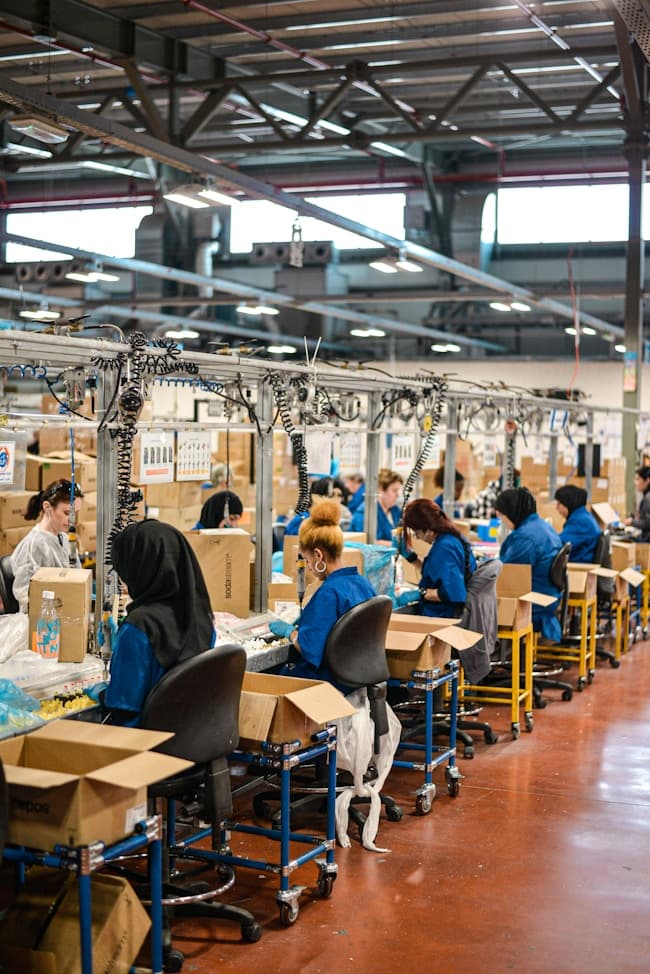
Cotton, spinning, weaving, processing and stitching all sit inside Pakistan. Your fabric does not cross a border before it becomes a garment — which shortens lead times and makes origin easy to evidence.
Duty-free into Europe
Under GSP+, more than 85% of Pakistani exports enter the EU duty and quota free. In 2024 that was worth around €732 million in tariff relief on roughly €7.5 billion of trade.
A tariff edge into the US
Pakistani goods carry a 19% reciprocal tariff, against 25% for India and 20% for Bangladesh and Vietnam — a real difference on a container of home textiles.
Depth, not just capacity
Value-added categories reached $11.3 billion in the nine months to March 2026. Denim, knitwear, home textiles and workwear all have established, auditable capacity.
If you buy textiles, Pakistan is already in your supply chain somewhere — the country shipped $17.93 billion of them in FY26. What is less widely understood is why it is an unusually straightforward place to buy from, and that comes down to one structural fact: the chain is vertically integrated inside the country.
Cotton is grown here. It is spun here, woven or knitted here, dyed and finished here, and stitched here. For a buyer that means a garment programme does not depend on fabric crossing a border before it becomes a product — which shortens lead times, removes a layer of origin risk, and makes traceability something a supplier can actually document rather than assert. Several of Pakistan's competitors import most of their fabric. That difference shows up in your critical path.
The landed-cost arithmetic
Pakistan holds GSP+ status with the European Union, which puts roughly two-thirds of tariff lines at zero duty and covers more than 85% of Pakistani exports entering the EU duty and quota free. In 2024 that was worth around €732 million in tariff relief on some €7.5 billion of trade, and Pakistani exporters claimed it on about 95% of eligible shipments — a utilisation rate that tells you the paperwork works in practice, not just on paper.
Into the United States, Pakistani goods carry a 19% reciprocal tariff. India is at 25%. Bangladesh and Vietnam are at 20%. On a category where margin is measured in points, sourcing origin is now worth several of them.
- €732m
- EU tariff relief, 2024
- ~95%
- of eligible shipments claim it
- $11.3bn
- value-added exports, 9M to Mar 2026
What you can actually buy
Home textiles are the country's strongest global position — bedwear, towels and terry at a scale few origins can match. Denim and workwear have deep, established capacity. Knitwear and jersey are competitive and improving. Readymade garments grew 3.87% in value and 5.55% in volume in FY26, which is the segment moving fastest.
The compliance apparatus is mature. OEKO-TEX is close to universal, GOTS and OCS are held by the organic-programme mills, and any unit serving European or American retail will hold a current SEDEX or WRAP social audit. These are not exotic requests here; they are the cost of doing business, and suppliers are used to being asked.
The question is rarely whether Pakistan can make it. It is which of several hundred capable units is the right one — and how quickly you can verify that.
That last part is the reason this platform exists. Al-Ukaz is building a verified national record of Pakistani manufacturers — company-level review, certifications checked against their issuer, capacity and export history in one place — so that finding and qualifying a supplier here takes days rather than a season.
What Pakistan makes
- Home textiles
- Bedwear, towels, terry, table linen and institutional made-ups. The category Pakistan is best known for worldwide.
- Readymade garments
- Woven shirts and trousers, workwear, denim apparel, knitwear, activewear and jersey.
- Yarn & fabric
- Cotton and blended yarn, greige and processed woven fabric, knitted fabric, denim — available to buy on its own or as the input to your garment programme.
- Technical & industrial
- Canvas, tarpaulin, filtration and medical textiles — a smaller base, growing quickly.
Where it is made
- Faisalabad
- Spinning, weaving, processing and a dense base of made-up units. The country's textile centre.
- Karachi
- Garments, denim and home textiles, with the port and most sourcing offices on the doorstep.
- Lahore & Sheikhupura
- Knitwear, garments and finishing, plus much of the buying-house layer.
- Multan
- Cotton, ginning and yarn feeding the chain upstream.
Standards this sector works to
What to ask for when you qualify a supplier in this category, and what an established exporter will already hold. Al-Ukaz checks these against the issuing body rather than taking an upload on trust.
OEKO-TEX Standard 100
Chemical safety of the finished article. Near-universal across the sector.
GOTS / OCS
Organic fibre content and chain of custody, for organic-cotton programmes.
SEDEX / SMETA · WRAP
Social and ethical audit, held as standard by units serving retail accounts.
ZDHC / Higg FEM
Chemical and environmental performance in wet processing.
ISO 9001
Quality management. Expect it as a baseline, not a differentiator.
Sourcing textiles & garments from Pakistan?
Tell us what you are looking for — category, volumes, the certifications you need — and we will point you at verified manufacturers who can serve it. Al-Ukaz operates under the endorsement of the Ministry of Commerce, Government of Pakistan.
Talk to us about sourcingManufacture in this sector?
Get on the record buyers are being pointed at. Registration for Pakistani manufacturers is open now.
Join the founding cohortSources
- Dawn — Textile exports stagnate at $17.9bn in FY26
- INP/WealthPK — Pakistan secures €732m tariff relief as GSP+ use rebounds to 95%
- Textiles Resources — Pakistan value-added textile exports rise 1% in July–March 2026
Figures are as reported at the dates given and are provisional where the underlying series is. Where published estimates differ, the range is stated in the text.